
Audio-Reactive Realism: Non-Human Subjects
Most current audio-reactive AI video workflows lean on bodies and use OpenPose, lip-sync, dancers, or a riggable human figure to guide the video or animation generation. I wanted to test a different approach: can videos based on pseudo-realistic AI imagery react to music, stay consistent through motion, and still keep a cinematic feel without using a person or skeleton as the control surface or model guidance?
Instead of making a body the audio-reactive element, I focused on non-human subjects. The theme became cybernetic plants and alien organisms. Prompts grounded in real botanical and biological references, then morphed through prompt permutations and pushed with sci-fi materials, hybrid anatomies, and synthetic textures for a more distinctive aesthetic.
The Thesis
Black Forest Labs FLUX.2 models provide the high-quality textures, cinematic stills, dense detail, and realistic material feel needed for this kind of animation approach. I use them as the visual base: the initial images and image-reference drivers that define the subjects before motion begins.
The audio-reactive shader then gives the motion a timing signal, turning the music into a visible guide layer. I also analyse the audio and use transients as planning points for transitions, actions, or accents where the rhythms are most impactful. Seedance and Kling use those stills for image interpolation, plus the guide video and a beat-informed prompt plan, to produce the final cinematic pass.
The thesis is simple: start with strong realistic source matter, then test whether non-human subjects can deform, fold, and pulse with music without becoming abstract visualisers or rigged characters.
The Challenge
Can you make cinematic, realistic animation with audio-reactive non-human subjects — preserving the kind of realism you'd expect in a film or advert? This links back to Supernatural Creatures, where Deforum and Parseq made audio-driven AI animation work at collection scale, and Flux Motion, where I pushed image-model motion further. Those results were audio-reactive or motion-focused, but still more abstract, dreamy, and less realistic than this test.
Solution: Use an audio-reactive source together with the music as multimodal guidance: the MP4 guide carries timing, the audio-reactive shader adds a visible motion layer on top, and FLUX images deliver realistic textures and shapes. Text prompts reinforce subject and motion intent, but beat-timed phrasing is best treated as guidance rather than edit control.
Caveat: as of June 2026, direct audio guidance in Seedance appears unreliable on its own, and I have seen similar reports from others. MP3 and WAV inputs do not seem dependable here; the working route is to serve the audio timing as MP4/video guidance. That means the shader may not be the whole effect by itself. The workflow confirms that audio timing can work when encoded into a video carrier, with the shader acting as the audio-reactive visual layer used for this test.
Workflow Comparison
A Seedance 2.0 workflow comparison: what changes when the same FLUX/BFL botanical references and track run through different Seedance routes? Routes A, B, and C compare no guide, direct audio (@audio1), and audio-reactive shader/video guidance (@vid1) across continuous-morph and 3-shot workflows. This is an assessment of that Seedance 2.0 workflow, not the wider AI-video model space. Kling does not support the same guidance setup here, so it appears only in Route D as a Kling 3.0 Omni multi-shot reference against the lighter Seedance 2.0 Fast route. One or two generations per route, so the point is the workflow and visible differences between routes.
Inputs → Output
The source FLUX stills and the audio-reactive shader guide (@vid1) that drive the comparison, then the finished output pass — two example sets.
 Image 1
 Image 2
 Image 3Image 1
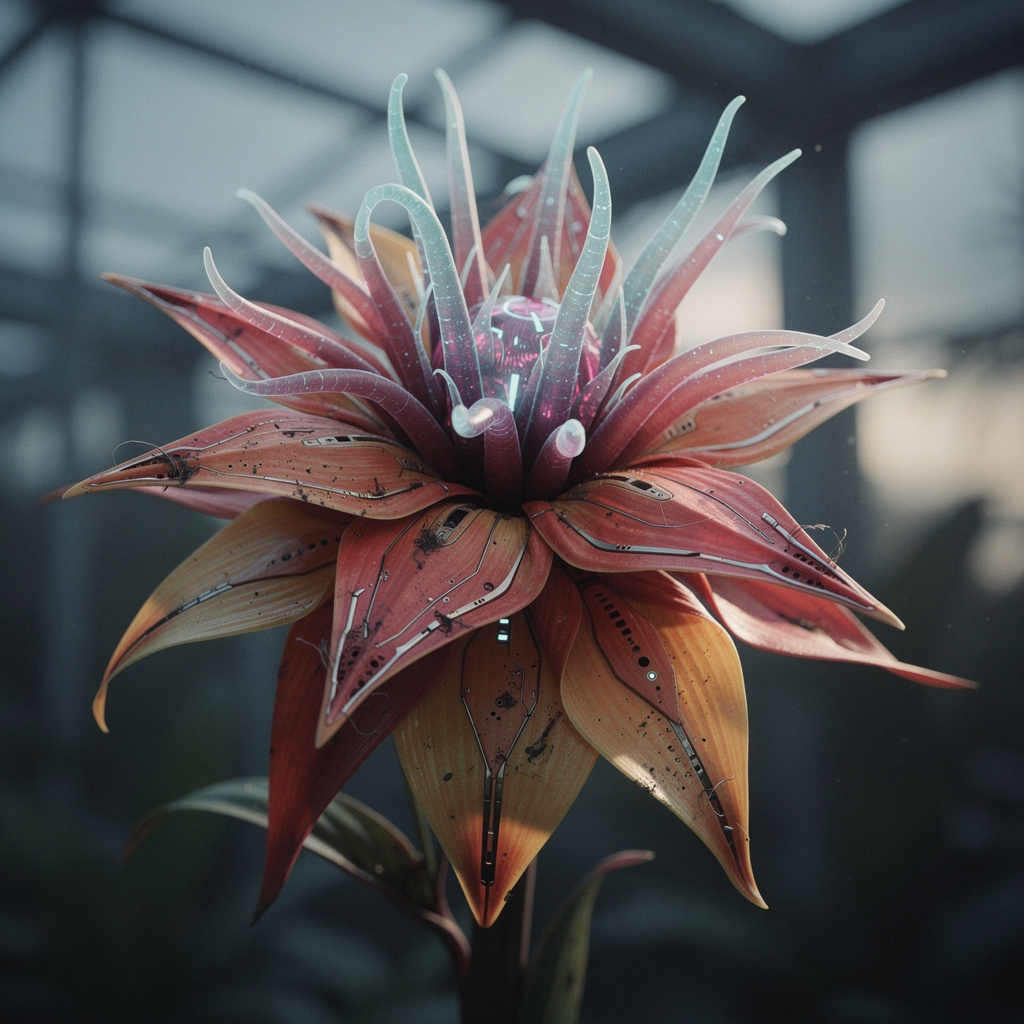 Image 2
Workflow
| FLUX source | Generate detailed textures and plant forms, then browse, select, and combine the strongest results | Black Forest Labs FLUX API, custom browser UI |
| Prompt morphing | Morph between strange botanical descriptions so subjects become hybrids, not fixed characters | Prompt permutation library |
| Audio analysis | Detect transients and use them as planning points for edits, prompts, and guide-video timing | Web Audio, transient detection + manual placement based on taste and timing |
| Prompt plan | Compile image references and prompt changes into one beat-informed prompt plan for the video model | Custom scheduling tool |
| Shader guidance | Turn the sound into a moving, controllable visual layer and record it as video guidance (@vid1) | Three.js / WebGL shaders + audio in MP4 format |
| Generation | Generate guided by several signals, or multimodal guidance, at once: prompt, image references, audio timing, and audio-visual shader video | Seedance 2.0 / Kling |
| Edit | Generate many 15-second variations, pick the strongest, and cut them to the track | Manual edit |
Findings
Direct audio is unreliable as a visual driver
As of June 2026, attaching WAV or MP3 directly behaves more like soundtrack or mood than strict motion control, which may be a current Seedance input-handling issue rather than a final model limitation. The models often reinterpret or remix the audio and sync to that instead of the original track.
MP4/video guidance is the strongest unlock so far
The strongest route is the audio-reactive shader exported as an MP4 guide. That points to a practical workaround: Seedance can follow timing when the audio signal is carried inside video guidance. It still does not fully isolate whether the motion comes from the shader visuals, the audio inside the MP4, or the combination.
Shader influence is visible, but not isolated
Some outputs show rounded structures that may come from the shader layer, while the music appears to guide transitions and motion. The current workflow suggests the shader contributes shape and rhythm, but the next controls need to test shader-only, audio-only, and combined guidance more directly.
Text schedules are approximate, not edit control
Prompt timestamps are instructions, not a timeline API. In the Freepik/Magnific Seedance route, duration control is coarse and discrete, while native Seedance 2.0 API guidance documents duration as integer seconds. Sub-second cues get softened or ignored, and shot interfaces tend to separate images unless the prompt explicitly says continue from the exact end state, end mid-morph, no cut.
Models interpret the same audio very differently
Some generations sync tightly to every transient, others give a looser and more musical response, and sometimes the model blends sound and image into something that feels like a single audiovisual object.
Manual editing is still part of the system
The strongest pieces come from picking the best 15-second variations and editing them together. Output 02 suggests the workflow is repeatable. The next step is making it a generative, consistent app.
LoRA is for vocabulary, not motion
A trained species LoRA helps consistency and visual identity. Motion still needs the shader, Three.js, or video driver.
Why This Matters
- 1.This approach tests whether objects and non-human subjects can be made audio-reactive, rather than using bodies or abstract shader forms as the default.
- 2.Initial outputs suggest that even mundane products can be interpolated, prompted, and guided as multimodal audiovisual subjects responding to music.
- 3.The useful part is not one clip, but a repeatable route: image references, beat-informed prompt planning, audio analysis, and audiovisual guide video working together.
Future Direction
This remains a living study rather than a fixed conclusion. The most useful next controls are to separate shader-only, audio-only, and combined MP4 guidance, then push the shader itself harder to see whether more expressive visuals give Seedance stronger choreography rather than just timing.
The other route is to bring this back into my Flux Motion pipeline: fast Klein 4B iteration, FLUX LoRAs trained on related plants, organisms, and textures, and more granular image sets up to Seedance's nine-image input limit. That should make interpolation more intentional, then open the same system toward product-object transformations where the proof becomes more commercially legible.
Stack
FLUX (BFL API) • Seedance 2.0 • Kling • Three.js / WebGL • Web Audio API • Python • Next.js 15 • Magnific